Overgrowth Removed So the Land Works Again
Brush cutting in Moulton, Athens, Florence, and the greater Northern Alabama area for properties where dense undergrowth, saplings, and overgrown vegetation block access or prevent use
Dense brush accumulates on North Alabama properties faster than most owners anticipate. A pasture edge left unmanaged for three or four years fills with privet, blackberry canes, sweetgum sprouts, and sapling-stage trees that form a wall impassable to foot traffic, let alone equipment. A N Property Professionals handles brush cutting in Moulton, Athens, Florence, and the greater Northern Alabama area, with the owner operating the equipment personally on every job rather than delegating to a rotating crew. That direct involvement means the person running the machine is also the one assessing the edges, obstacles, and scope in real time.
Work progresses systematically across the property, using cutting equipment matched to the vegetation type and density. Lighter overgrowth is handled differently than stands of thick saplings or multi-stem shrubs that have developed woody bases—the approach is adjusted to what's actually on the ground rather than applied uniformly. Material is processed on-site or removed depending on the job scope, which is determined during the free quote visit before work begins.
Set up a free quote visit so the owner can walk the property and confirm the clearing scope before any work is scheduled.
How Brush Clearing Exposes Usable Property
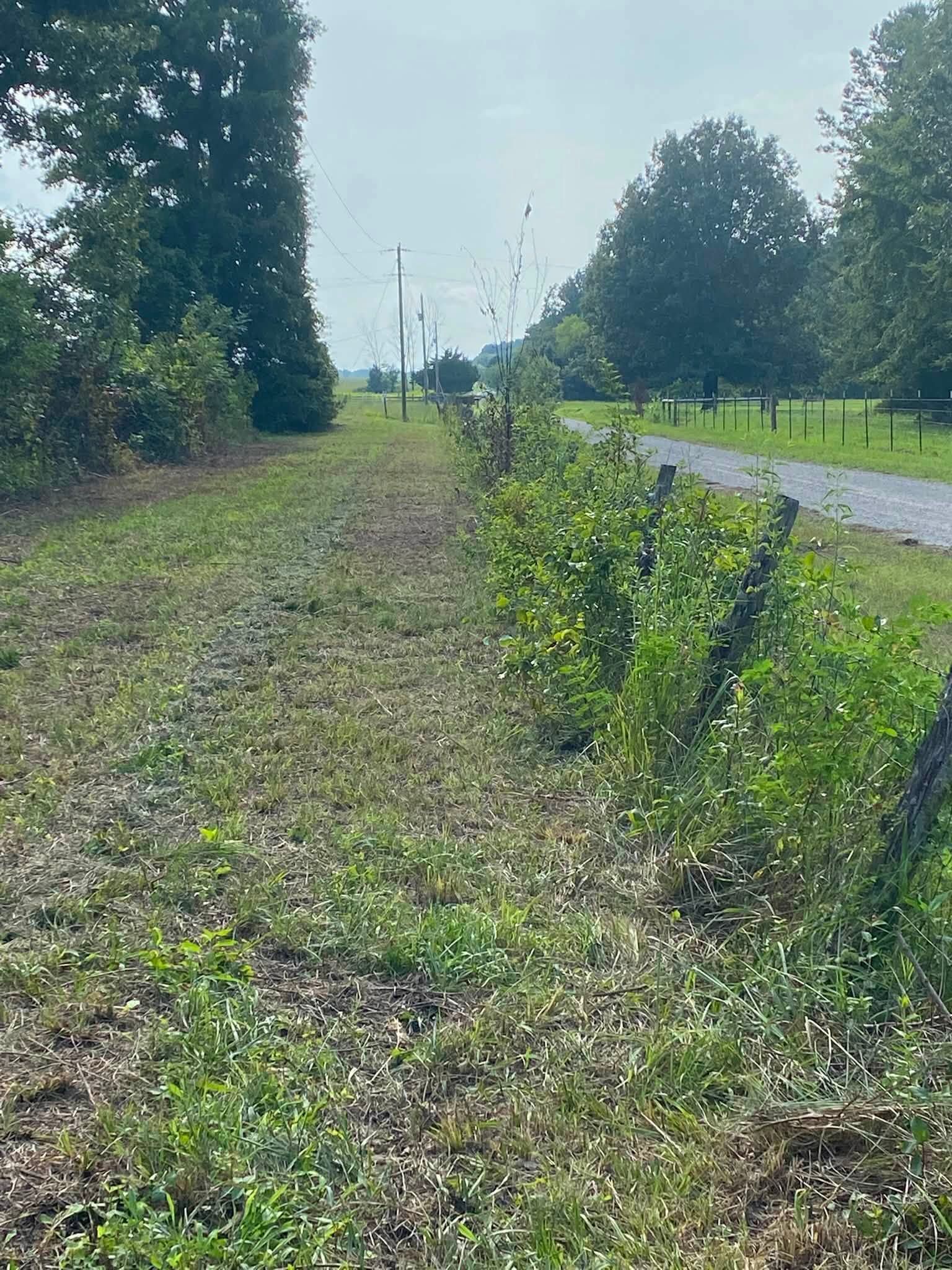
Brush cutting works by removing the above-ground vegetation at or near grade, including small trunks, canes, and limbs that have become the dominant surface cover. On properties where access has been blocked for years, the first visible change is that sight lines open across the parcel—fence lines that were buried in vegetation become visible, grade changes become apparent, and any structures or obstructions on the property become assessable. A N Property Professionals sequences the work to move from accessible edges inward, keeping cut material ahead of the machine rather than allowing it to accumulate behind in ways that slow progress.
Once brush cutting is finished, what you'll notice immediately is that the land is accessible: you can walk it, grade it, or move equipment across it without the resistance that dense overgrowth creates. If the cleared area is intended for pasture, a food plot, or a building site, the exposed ground is ready for the follow-on work—tilling, grading, or seeding—without an intermediate clearing phase.
Some brush cutting jobs reveal conditions underneath the overgrowth that change the scope slightly—a buried drainage swale, old fencing tangled in the root systems, or areas where erosion has undercut the surface. The owner identifies these during the job and adjusts rather than working around them, which keeps the finished site genuinely usable rather than nominally cleared.
Questions About How Brush Cutting Works
The questions below address how brush cutting is actually performed, what the work involves at different stages, and what property conditions affect the approach. They are focused on the service itself, not on scheduling or pricing.
What cutting equipment is used and how is it matched to the vegetation?
Equipment selection depends on the density and diameter of the brush—lighter overgrowth and cane stands are handled with different cutting heads than multi-stem shrubs with established woody bases, and the operator makes that determination after walking the site.
How does the operator handle areas where brush runs against a fence line or structure?
Those edges are worked carefully to cut vegetation at the base without damaging the fence or structure, and material is directed away from the boundary rather than piled against it.
What happens to the cut material once the brush is down?
Depending on the job scope established during the quote visit, material is either processed on-site—left in place to break down—or removed from the property entirely if the planned land use requires a clean finish.
When is brush cutting the right approach versus forestry mulching?
Brush cutting is appropriate when vegetation is primarily shrubs, canes, and small saplings without significant root systems to address. When large-diameter trees and stumps are part of the clearing need, forestry mulching addresses roots and above-ground growth simultaneously in a single pass.
How do you know when the work meets a standard that makes the land genuinely usable?
The finished site should be traversable by equipment and foot traffic with no remaining cane walls or brush mats—if grading equipment or a tiller cannot move freely across the cleared area, the work is not complete.
A N Property Professionals provides free quotes on brush cutting jobs of any size, with the owner reviewing the property before any scope or approach is finalized. A N Property Professionals also handles brush cutting in Hartselle, Decatur, Athens, Cullman, and Russellville. Contact the office at (256) 274-7930 to arrange a property walkthrough and discuss what the work involves for your specific site conditions.