Ditches Cleared So Water Moves the Way It Should
Ditch cleaning and drainage maintenance in Moulton, Athens, Florence, and the greater Northern Alabama area for roadside, field, and property ditches where sediment and vegetation buildup has slowed or blocked water flow
A ditch that no longer moves water freely isn't failing—it's blocked. Sediment accumulates along the ditch bottom over time, vegetation roots into the banks and floor, and debris collects at low points until the channel can no longer carry its intended volume. A N Property Professionals handles ditch cleaning and drainage maintenance in Moulton, Athens, Florence, and the greater Northern Alabama area, removing the material that blocks flow and re-establishing the grade that allows water to move through the channel rather than pooling in it. The owner is directly involved in every job, keeping the assessment and the work under the same set of hands.
Cleaning begins with removing accumulated sediment, vegetation, and debris from the ditch bottom and sides. Once that material is out, the crew re-grades the ditch floor and bank slope so the channel has consistent fall from one end to the other. That re-grading step is what separates ditch cleaning from ditch maintenance: removing debris alone restores temporary capacity, but re-establishing grade is what keeps water moving continuously rather than stalling at flat or back-graded sections. Rural properties in Lawrence County and the surrounding area often carry long ditch runs that serve both drainage and road access functions, and a blockage at any point along that run backs water up the full length behind it.
Arrange a site visit with A N Property Professionals to assess where flow is restricted and what cleaning and re-grading work will restore the ditch to working condition.
What Ditch Cleaning Addresses and Why Re-Grading Matters
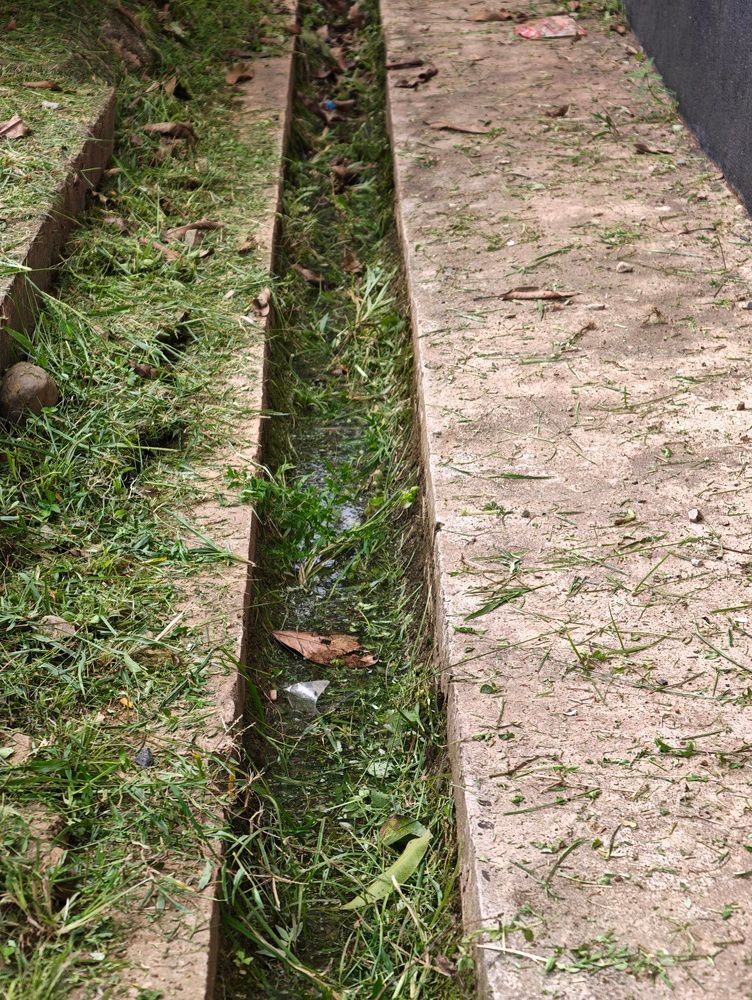
Sediment accumulates in ditch channels because flowing water carries fine particles that drop out of suspension wherever the current slows—at flat sections, behind debris piles, and at points where vegetation has narrowed the channel. The cleaning process excavates that accumulated material and restores the channel cross-section, which increases the volume the ditch can carry before it overtops the banks. Re-grading the ditch bottom after cleaning re-establishes the longitudinal slope that keeps water moving rather than pooling at low points between cleaning cycles.
Once the work is finished, the specific changes are observable: standing water that was pooling in the ditch channel between rain events is gone, the channel bottom is consistent in elevation and slope from inlet to outlet, and bank edges are defined rather than eroded into the floor. Properties where ditch blockage was backing water toward structures or saturating adjacent soil will see that condition resolve once flow is restored and maintained through the full ditch run.
Ditch maintenance is an ongoing requirement rather than a one-time correction. The interval between cleanings depends on how much sediment the contributing drainage area carries and how quickly vegetation re-establishes in the channel. Properties with significant upstream erosion sources or dense bank vegetation typically need attention more frequently than ditches in stable, maintained areas.
Common Questions About Ditch Cleaning and Drainage Maintenance
The questions below address the ditch cleaning process, how grade is re-established, and what property owners can observe to determine when maintenance is needed.
What does re-grading a ditch bottom actually involve after sediment is removed?
Once sediment and debris are cleared from the channel, the crew uses a grading blade to cut the ditch floor to a consistent slope from the high end to the outlet. That slope ensures water has continuous fall through the full length of the channel and doesn't stall at flat sections.
How do you identify where a ditch has lost its effective grade?
Sections where water pools after rain and doesn't drain within a day, areas where the ditch floor appears higher than adjacent sections on either side, and points where vegetation is establishing in standing water rather than moist soil are all indicators of flat or back-graded sections that need re-grading.
Why does vegetation in the ditch channel reduce drainage capacity beyond just narrowing the opening?
Plant root systems bind sediment and accelerate deposition around them, which progressively raises the channel floor. A vegetated ditch section can lose several inches of effective depth over a single growing season, which is why vegetation removal is part of cleaning rather than a separate optional step.
What conditions on North Alabama-area rural properties most often lead to rapid ditch filling?
Long ditch runs that drain cultivated fields or bare disturbed soil carry significantly higher sediment loads than ditches draining stable, vegetated ground. Properties along county roads in Lawrence County where upstream land use has changed—from timber to agriculture or from vacant to developed—often see ditch filling accelerate after that change occurs.
How do you confirm a cleaned ditch is functioning correctly after the work is complete?
Water should move visibly through the channel during and after a rain event without pooling at the cleaned sections. The ditch floor should be at a consistent elevation with no low spots holding standing water, and banks should be defined with no erosion slumping back into the channel bottom.
A N Property Professionals provides free quotes on ditch cleaning and drainage maintenance—schedule a property walk to identify where flow is restricted and what re-grading work will restore the channel. A N Property Professionals also performs ditch cleaning and drainage maintenance in Hartselle, Decatur, Athens, Cullman, and Russellville.