Water Routed Away From Where It Causes Damage
Drainage solutions in Moulton, Athens, Florence, and the greater Northern Alabama area for properties where standing water, pooling, or poor runoff management causes erosion, access problems, or structural concerns
Standing water on a property is a symptom of a drainage condition that won't correct itself without intervention. A N Property Professionals designs and installs drainage solutions in Moulton, Athens, Florence, and the greater Northern Alabama area, and every system is built to function permanently rather than as a temporary fix that requires repeat attention. The work addresses where water is entering a problem area, what is preventing it from moving through or away from that area, and what infrastructure—grading, channels, culverts, or subsurface systems—creates a durable path for it to follow instead.
Site assessment determines the drainage design before any work begins. The owner evaluates the topography, identifies where water accumulates and why, and develops a solution matched to the actual flow patterns on that parcel. Drainage work that is not designed from observed site behavior tends to redirect water rather than resolve it—moving a pooling problem from one location to another rather than establishing a functional outlet. A N Property Professionals provides free quotes on all drainage work, with the scope defined before any commitment is made.
Schedule a free site evaluation to review where water is accumulating on your property and what a permanent drainage solution would involve.
What Drainage Work Actually Accomplishes Long-Term
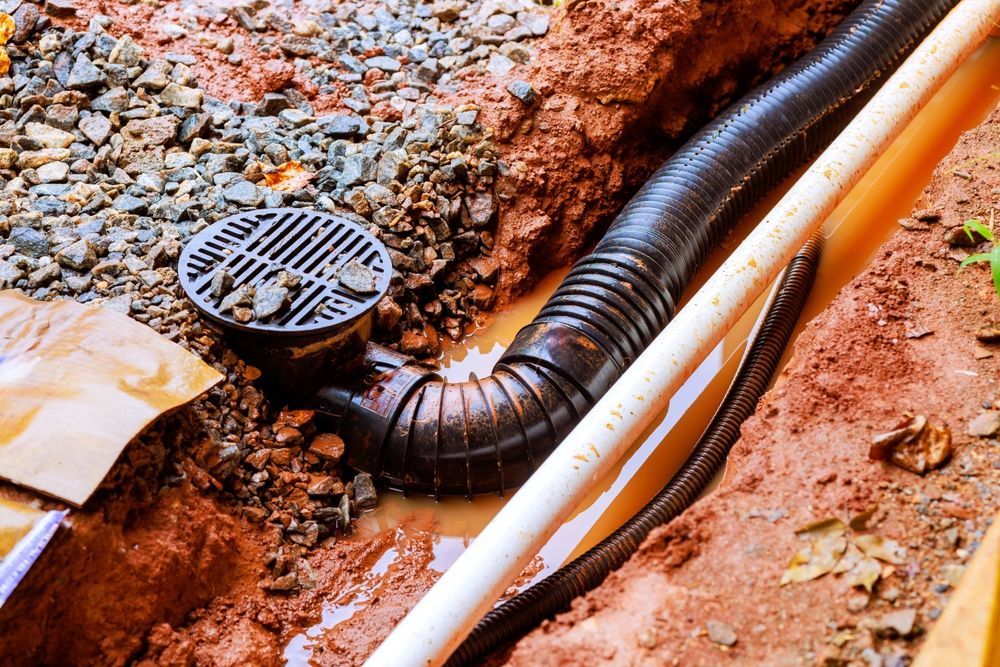
Drainage systems work by establishing grade, capacity, and outlet in sequence—each element has to function for the system to perform. Grade directs water toward a collection or conveyance point. Capacity determines whether the channel, pipe, or swale can move the volume that reaches it during a significant rain event. Outlet determines where that water ultimately exits the property without causing a secondary problem at the point of discharge. When any one of these elements is undersized or misaligned with the others, the system fails at its weakest point regardless of how well the rest is built.
Once drainage work is complete, the observable changes are specific: areas that previously held standing water drain within a predictable window after rain events rather than remaining wet for days. Erosion channels that were actively cutting through topsoil stabilize because sheet flow is now directed rather than dispersed. Access points—driveways, gates, and pathways—that were regularly impassable after rain become consistently usable. Those are the functional indicators that the system is working as designed.
Drainage solutions on properties in the Trinity and Courtland areas often address the interplay between road ditches, property grade, and low-lying zones that collect runoff from adjacent parcels—the design has to account for off-site water contribution, not just what originates on the property being worked. That consideration is part of the site assessment process rather than addressed after installation.
Common Questions About How Drainage Work Is Done
The questions below address what drainage solutions involve, how systems are designed for different site conditions, and what property owners will see when properly designed drainage is functioning correctly. Each question is focused on the work and the process.
How does the site assessment determine what type of drainage system is needed?
The owner walks the property and traces where water enters, where it accumulates, and what is blocking its natural movement—that observation drives the system design rather than applying a standard solution to every site regardless of conditions.
What is the difference between surface drainage and subsurface drainage, and how is that decision made?
Surface drainage—grading, swales, and open channels—handles sheet flow that moves across the top of the ground. Subsurface drainage handles water that infiltrates the soil and creates saturation at depth. Many properties require both, and the site assessment identifies which failure is driving the visible problem.
How is a drainage outlet chosen and why does it matter?
The outlet is where water exits the property or enters a conveyance system, and it must have adequate capacity and legal access—discharging onto adjacent property or into a ditch without capacity creates a secondary problem that negates the drainage work done upstream of it.
What does a permanent drainage installation look like compared to a temporary fix?
Permanent systems use properly sized culverts, compacted channel profiles, and outlet structures that maintain their geometry under normal use rather than shifting with traffic or eroding with each subsequent rain event—the design accounts for the flow volumes the system will actually see, not just average conditions.
Why do some North Alabama-area properties develop drainage problems even on parcels with reasonable slope?
Properties with clay-heavy subsoil have low infiltration rates regardless of surface grade, meaning water that cannot percolate moves laterally along the subsoil surface and surfaces as seeping or pooling in low areas—those conditions require a drainage design that intercepts lateral flow rather than simply redirecting surface runoff.
A N Property Professionals offers free quotes on all drainage work, with the owner reviewing site conditions before any system is proposed or scoped. A N Property Professionals also installs drainage solutions in Hartselle, Decatur, Athens, Cullman, and Russellville. Call (256) 274-7930 to arrange a property evaluation and discuss what a functional, permanent drainage system would involve for your specific site.