Land Cleared and Ready in One Pass
Forestry mulching in Moulton, Athens, Florence, and the greater Northern Alabama area for overgrown lots, dense tree cover, and sites that need clearing before construction begins
A N Property Professionals provides forestry mulching in Moulton, Athens, Florence, and the greater Northern Alabama area, handling every job directly through the owner—not a subcontracted crew. Properties across this part of North Alabama tend to carry dense secondary growth: cedar thickets, sweetgum saplings, privet, and overgrown field edges that have reclaimed formerly open ground over decades. When that vegetation stands between you and a usable site, forestry mulching processes everything in a single pass rather than staging multiple rounds of chainsaw work, burning, and haul-off.
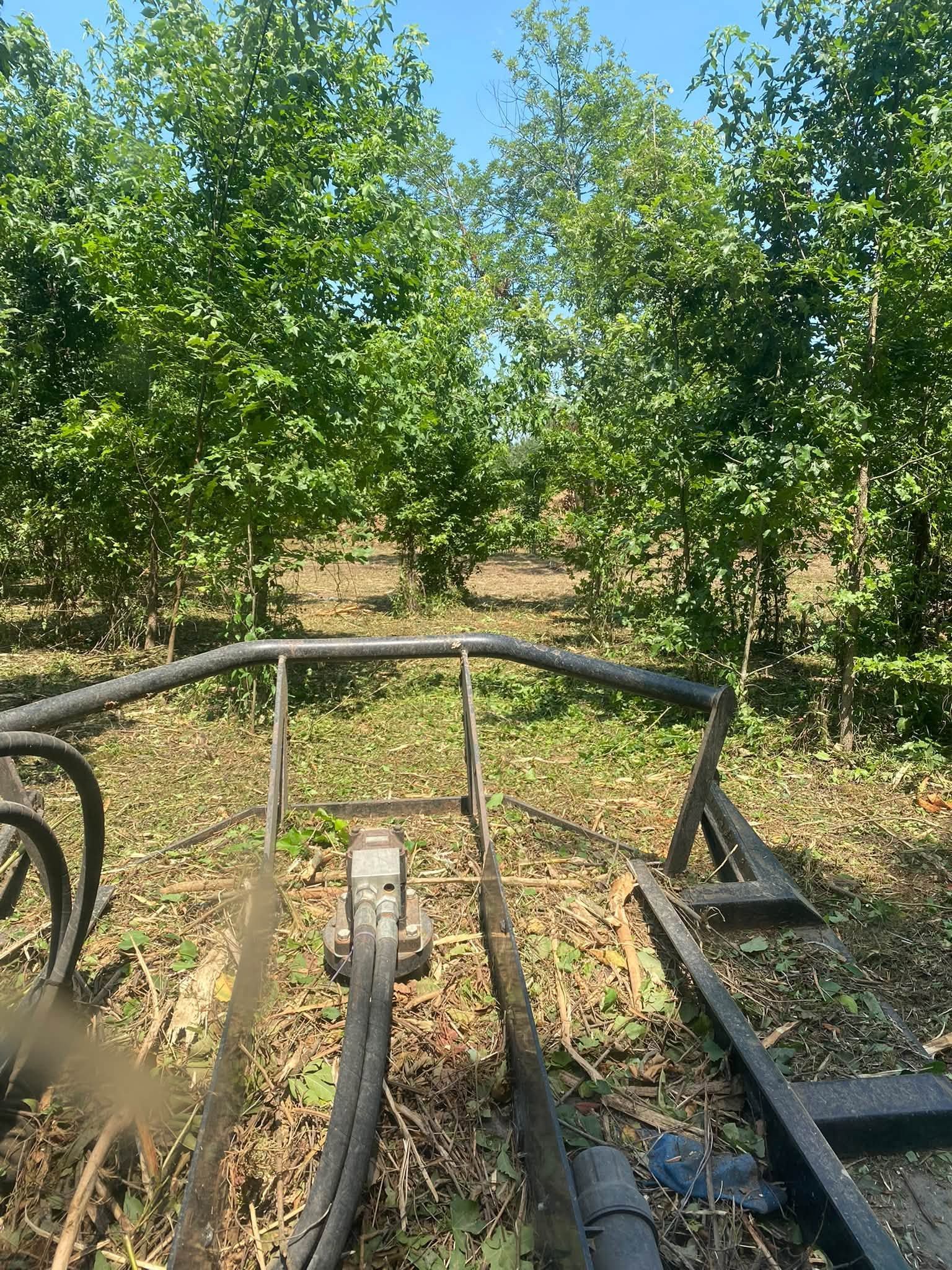
The process uses a mulching head mounted on tracked heavy equipment, which grinds trees, stumps, brush, and limbs simultaneously as the machine moves across the land. What comes out the back is fine mulch that remains on-site—it can be spread for erosion control or incorporated during grading rather than trucked out at additional cost. Because stumps and root crowns are ground down in the same operation, no separate stump grinding phase is needed afterward, which is a meaningful difference from conventional cut-and-haul clearing on larger parcels.
Request a free on-site quote to review your acreage and discuss what clearing approach fits your project timeline.
Why a Single-Pass Clearing Method Changes the Scope
Conventional land clearing separates felling, stump grinding, debris hauling, and site smoothing into sequential operations—each one requiring equipment to access, stage, and exit the property. Forestry mulching collapses those phases because the mulching head handles woody material of nearly any diameter while the machine moves forward. A N Property Professionals operates this equipment directly, meaning the owner is reading the site conditions in real time and adjusting for slope changes, wet low spots, or areas where root systems run shallow near a planned building footprint.
Once the work is finished, what you'll see is a uniformly mulched surface with no standing stumps, no slash piles, and no burn scars. The ground is trafficable for follow-on equipment immediately, which matters when a building site needs grading or a septic installer needs access within a short window. The mulch layer left behind also holds the topsoil in place on sloped parcels while grading is being planned.
The method works across a range of vegetation densities, from light overgrowth on abandoned pasture edges to timber-scale clearing on wooded tracts. On sites with large-diameter hardwoods, the operator determines whether the mulching head handles them directly or whether certain trees are felled first—that decision is made at the site, not from a standard checklist.
What to Know Before the Work Begins
Property owners commonly have questions about how forestry mulching actually works on their specific conditions. The answers below address the service itself, including how the process runs, what it leaves behind, and how site conditions affect the approach.
What happens to the stumps when forestry mulching is done?
The mulching head processes stumps and root crowns at the same time it clears standing trees, grinding them down flush with or below grade so no separate stump grinding step is required afterward.
How does the operator decide which direction to work across the property?
The operator reads the terrain and vegetation density first, then works in passes that keep the machine on stable ground and move debris toward areas where it can be processed without piling against fence lines or structures.
What does the property look like when the job is finished?
Most projects are completed within a few days, depending on building size and complexity.
Why does mulch staying on-site matter for properties in this area?
On parcels in Northern Alabama with sloped terrain or bare clay subsoil near cleared edges, the mulch layer left behind holds topsoil in place and reduces erosion while grading or construction planning is underway, without requiring a separate erosion-control step.
How does vegetation type affect how the work is performed?
Dense hardwood stands require different head speeds and pass widths than light brush or sapling regrowth—the operator adjusts both in real time based on what the equipment is processing, which affects how evenly the finished mulch layer is distributed.
A N Property Professionals offers free quotes on every forestry mulching job, with the owner reviewing the site before any pricing is provided. A N Property Professionals also handles forestry mulching in Hartselle, Decatur, Athens, Cullman, and Russellville. To get started, arrange a site visit so the scope and equipment approach can be assessed against your actual acreage and vegetation conditions.