Sites Prepared Before Equipment Ever Arrives
Land clearing in Moulton, Athens, Florence, and the greater Northern Alabama area for building sites, property cleanup, and parcels that need trees, stumps, and debris removed before development begins
What a cleared site looks like when equipment rolls off matters as much as the clearing itself. A N Property Professionals handles land clearing in Moulton, Athens, Florence, and the greater Northern Alabama area, with the owner conducting the site assessment personally and directing every phase of the work from initial evaluation through final pass. Properties across this part of North Alabama range from overgrown former pasture to mature timber tracts to abandoned homestead lots—each one presents a different combination of tree diameter, stump density, debris accumulation, and grade change that determines the right clearing sequence and equipment approach.
The assessment phase is not a formality. The owner walks the site before any work begins to identify the clearing method that fits the actual conditions: whether material will be processed on-site or hauled, where the grade work intersects with the clearing scope, and whether any buried obstacles or drainage features need to be flagged before equipment starts moving. Equipment then removes trees, stumps, brush, and debris according to that plan, with adjustments made as subsurface conditions or access constraints become apparent during the job.
Arrange a free site assessment so the owner can evaluate your parcel and outline what the clearing scope involves before any commitment is made.
What Proper Site Clearing Actually Requires
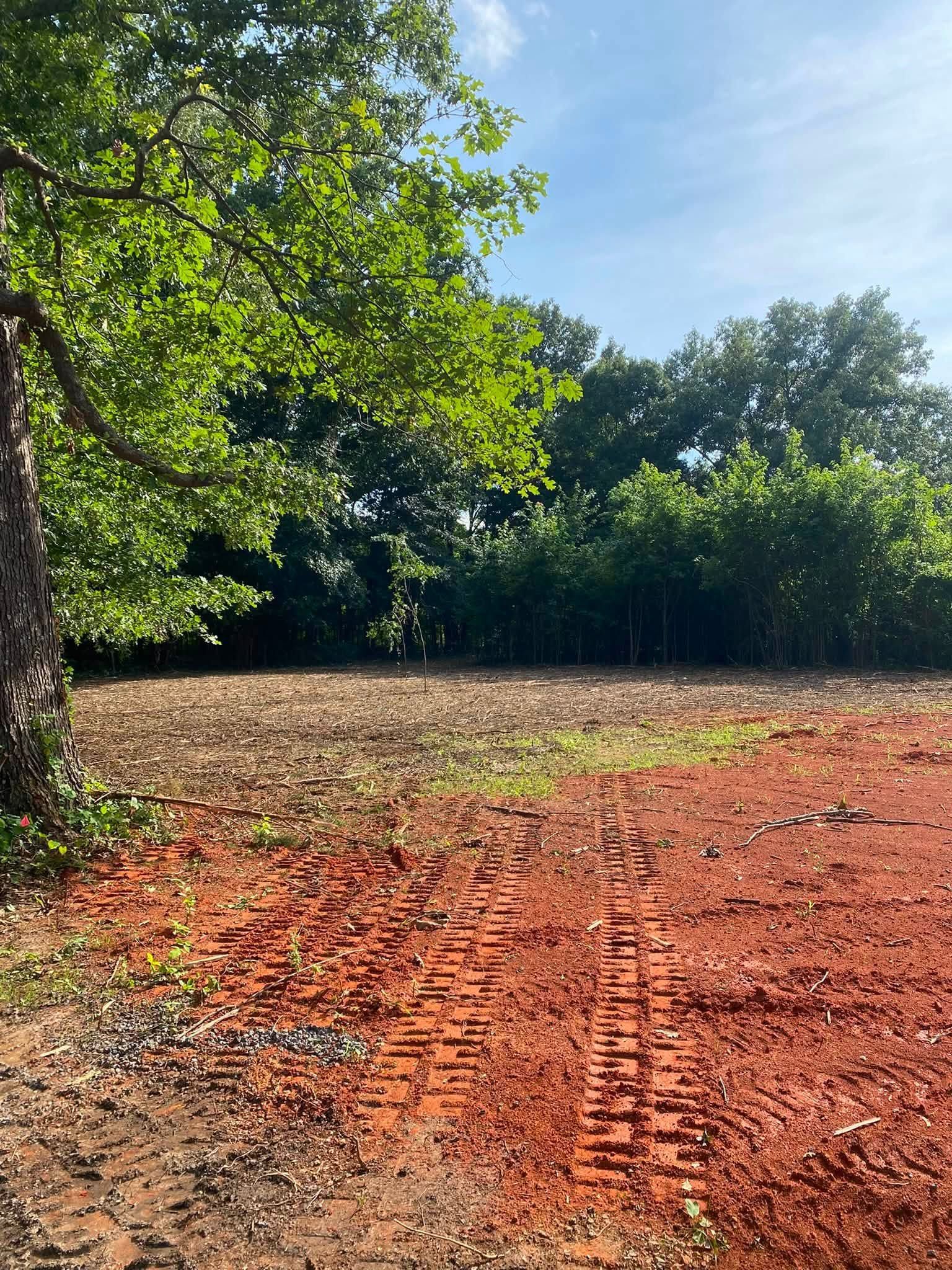
Land clearing done correctly leaves a site workable for what comes next—not just visually open. That distinction matters because clearing intended for a building foundation has different requirements than clearing for a pasture, a road cut, or a septic field. The grade after clearing must account for how water will move across the exposed surface, where construction equipment will stage, and whether the soil underneath the removed vegetation is stable enough for the planned use. A N Property Professionals factors those downstream requirements into how the clearing is sequenced, not as an afterthought once the trees are down.
Once clearing is complete, you'll see a site where stumps are removed rather than ground flush, where debris is gone from the building envelope rather than windowed at the edges, and where the topography reads clearly enough for a surveyor or grading contractor to work from it directly. That finished condition is what separates clearing that enables the next phase from clearing that creates additional prep work before construction can begin.
On projects where material volume is high, the decision about on-site processing versus haul-off depends on what the cleared ground will be used for—mulched material left in place changes how grading behaves, and that trade-off is addressed during the assessment rather than resolved arbitrarily on the day of the job.
Answers About How the Land Clearing Work Is Done
The following questions address what land clearing involves at the site level—how decisions are made, what the process looks like at different stages, and what property conditions affect the approach. Each answer is focused on the work itself.
How does the site assessment determine the clearing method used?
The owner walks the parcel to identify tree density, stump size, debris type, and grade conditions before recommending an approach—whether that's forestry mulching, conventional clearing, or a combination—because the same equipment does not perform equally across all site conditions.
What happens to stumps and root systems during land clearing?
Stumps and root crowns are removed as part of the clearing scope, not left in place for a separate grinding phase, because buried root systems that are left to decay can create grade instability for foundations or driveways installed over them.
How does clearing sequence affect the finished grade on a building site?
Equipment works from the perimeter inward or along contour lines depending on slope, so that cut material is always moving toward a staging area rather than being pushed across the area that will become the building pad, which keeps the finished surface more uniform.
What do North Alabama-area properties typically present that affects how clearing is scoped?
Parcels in this part of North Alabama often have a mix of cleared and heavily wooded zones on the same tract, with mature hardwoods at higher elevations and dense secondary growth in draws and low areas—that transition requires the operator to shift approach mid-job rather than running the same pass across the entire parcel.
How do you verify the site is genuinely ready for construction once clearing is finished?
A ready site allows a grading contractor to establish pad elevation from existing terrain without removing additional material, supports equipment access without requiring additional fill, and has no buried stumps or debris within the building envelope that could cause differential settlement later.
A N Property Professionals offers free quotes on land clearing jobs of any scale, with the owner evaluating each site before a scope is finalized. A N Property Professionals also handles land clearing in Hartselle, Decatur, Athens, Cullman, and Russellville. Call (256) 274-7930 to schedule a site walkthrough and discuss what your parcel requires before any work begins.