Driveways Built to Stay Passable Year-Round
Gravel driveway installation in Moulton, Athens, Florence, and the greater Northern Alabama area for unpaved access roads, rural lots, and long private drives that require a stable, compacted surface
A N Property Professionals installs gravel driveways in Moulton, Athens, Florence, and the greater Northern Alabama area, handling every stage of the job from base preparation through final compaction. Rural and agricultural properties in Lawrence County commonly run long unpaved drives across variable terrain, and a driveway that isn't properly graded at the outset develops ruts, soft spots, and drainage problems that worsen with every vehicle pass. The owner handles every job directly, which means the same person who assesses your site is the one doing the work.
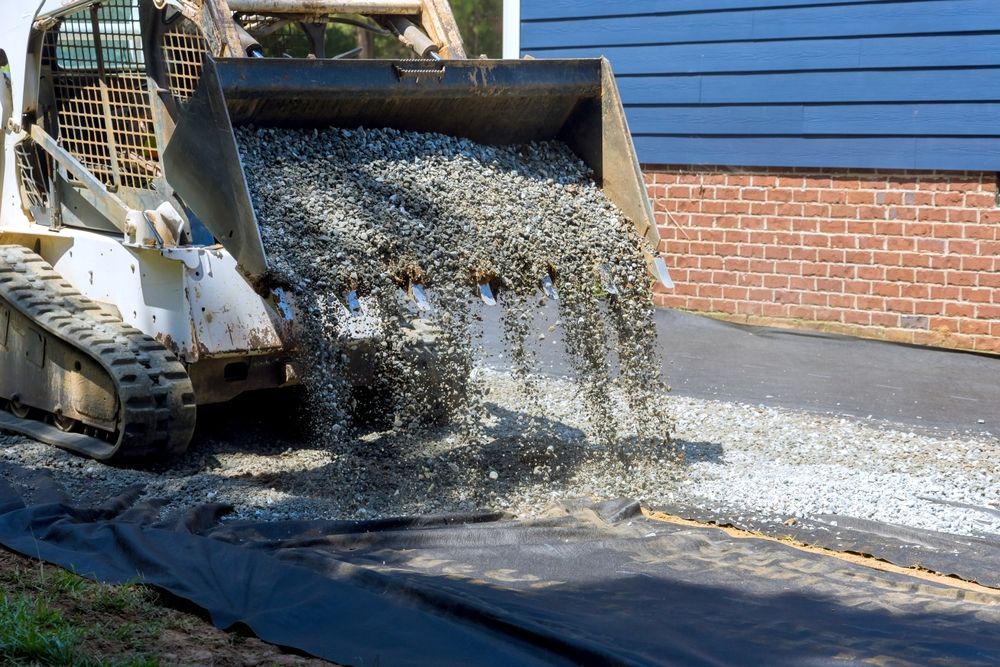
Installation begins with a site walk to assess existing grade, drainage direction, and subbase condition. Debris is removed, the subbase is graded to the correct slope, and the ground is compacted before any gravel is placed. That sequence matters because gravel laid over soft or uneven ground migrates and displaces under load—compacting the subbase first gives the finished surface the structural support it needs to hold its shape. Once gravel is spread and compacted, the driveway is immediately functional.
Request a free on-site quote to review your property's grade and determine the right approach for your driveway layout.
What Proper Base Preparation Actually Accomplishes
The difference between a gravel driveway that stays level and one that develops washboards and potholes comes down almost entirely to how the subbase is prepared before gravel is applied. The crew removes existing debris, cuts high spots, fills low areas, and compacts the surface in lifts so the foundation is consistent across the full length of the drive. Skipping any of those steps produces a driveway that looks finished but begins shifting within the first season of use.
Once gravel is spread and final compaction is complete, you'll notice the surface drains cleanly rather than pooling in low spots, and vehicles can move across it without breaking through soft patches. Proper grading also keeps gravel from migrating to the edges over time, which extends the interval between re-grading maintenance visits. Rural properties in the Moulton area with long driveways crossing sloped ground see the biggest functional difference from correctly established crown and grade.
Gravel depth and material type can vary based on expected load—light passenger traffic needs less depth than a drive that regularly takes heavy equipment or delivery trucks. Those decisions are made during the initial site assessment and factored into the project before work begins.
Common Questions About Gravel Driveway Installation
The questions below address how gravel driveway installation actually works, what affects the approach, and what you'll see when the job is finished.
What happens during the site assessment before installation begins?
The owner walks the full driveway path to evaluate existing grade, drainage flow, and subbase condition before any equipment is brought in. That assessment determines how much cut and fill is needed and where compaction is most critical.
How does grading direction affect how the finished driveway performs?
A correctly graded surface crowns at the center so water sheds to both sides rather than collecting in the travel path. Without that crown, water moves through the gravel layer instead of off it, which softens the subbase and accelerates rutting.
Why does compaction happen before the gravel is spread rather than after?
Compacting the subbase first stabilizes the ground so gravel doesn't sink unevenly under the first load. A second compaction pass after gravel is spread locks the material in place, but it can't compensate for a subbase that was never stabilized.
What should you look for to identify whether a gravel driveway needs re-grading?
Visible ruts deeper than two inches, gravel accumulating along the edges rather than staying in the travel path, and water pooling in the center after rain are the clearest signs that the surface grade has deteriorated and the driveway needs attention.
How does driveway length and terrain on North Alabama-area rural properties affect the scope of installation?
Long drives crossing multiple elevation changes require more precise cut-and-fill sequencing than a short flat run. Properties with natural drainage channels crossing the path may also need culvert work addressed before gravel is placed to avoid washout at those crossing points.
A N Property Professionals provides free quotes on every gravel driveway project—arrange a site visit to review your property and get a clear picture of what the installation involves. A N Property Professionals also installs gravel driveways in Hartselle, Decatur, Athens, Cullman, and Russellville.